
Bilingual | 茶香贯千年:从宋代点茶读懂宋式风雅
The Fragrance of Pouring Tea for a Thousand Years: Understanding the Fashions and Grace of the Song Dynasty Through Tea Ceremony
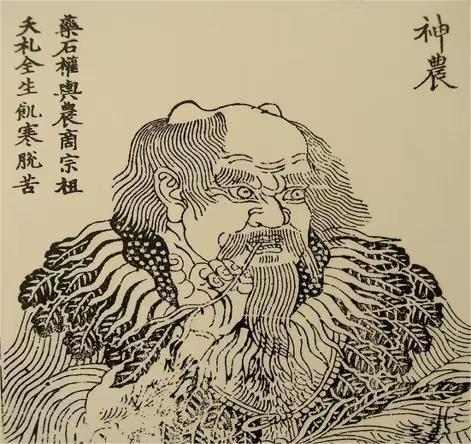
茶,不止是生津止渴的饮品,更是承载着千年智慧的文化符号。从神农氏"尝百草,日遇七十二毒,得茶而解之"的传说,到如今遍布大街小巷的茶席茶社,茶文化早已融入华夏文明的血脉,成为中国人独有的生活美学。今天,就跟着智识文旅一同走进中国茶文化的世界,尤其探寻宋代点茶的那份极致风雅。
Tea is not just a drink to quench thirst, but a cultural symbol carrying thousands of years of wisdom. From the legend of Shennongshi "tasting hundreds of herbs, encountering seventy-two poisons a day, and being cured by tea" to the current tea tables and tea houses scattered all over the streets and alleys, tea culture has long been integrated into the blood of Chinese civilization and become a unique life aesthetics of the Chinese people. Today, let's joinZHISHI Cultural Tourism and explore the world of Chinese tea culture together, especially delving into the ultimate elegance of pouring tea in the Song Dynasty.
一、茶之溯源:
从草木到文明的蜕变
Origin of Tea:
Transformation from Plants to Civilization
中国是茶的故乡,也是茶文化的发源地。早在先秦时期,茶就已作为药用植物被记载;汉代时,茶开始逐渐走向日常饮用,文人雅士间已出现饮茶之风;到了唐代,茶文化迎来第一个鼎盛期——陆羽著《茶经》,系统总结了种茶、采茶、制茶、饮茶的全套技艺,将茶从"饮"提升至"道"的层面,"茶圣"之名也由此流传。
China is the hometown of tea and the birthplace of tea culture. As early as the pre-Qin period, tea was recorded as a medicinal plant; in the Han Dynasty, tea gradually became a daily drink, and the custom of drinking tea emerged among literati and scholars; in the Tang Dynasty, tea culture ushered in its first peak period——Lu Yu wrote "The Classic of Tea", which systematically summarized the complete set of techniques for planting, picking, processing and drinking tea, elevating tea from the level of "drinking" to "Tao", and the title of "Tea Sage" has been passed down since then.
二、宋代点茶:
风雅极致的"中式拉花"
Pouring Tea in the Song Dynasty:
The Ultimate Elegance of "Chinese-style Latte Art"
如果说唐代煎茶是豪迈洒脱的盛唐气象,那宋代点茶便是精致内敛的宋人风骨。在宋代,点茶不仅是日常饮品的制作方式,更是上至皇室贵族、下至文人百姓都追捧的社交活动,甚至成为"全民潮流"。
If tea decoction in the Tang Dynasty is the bold and unrestrained atmosphere of the prosperous Tang Dynasty, then pouring tea in the Song Dynasty is the exquisite and introverted character of the people in the Song Dynasty. In the Song Dynasty, pouring tea was not only a way of making daily drinks, but also a social activity pursued by royal nobles, literati and common people, and even became a "national trend".
1. 何为点茶?
What is Pouring Tea?
点茶,简单来说,是将研细的茶末置于茶盏中,用沸水"点注",同时以茶筅快速搅拌,使茶末与水充分融合,形成细腻绵密的泡沫(宋代称"沫饽")的饮茶方式。相较于唐代煎茶,点茶更注重操作的技巧性和茶汤的观赏性,堪称古代版的"茶艺表演"。
Simply put, pouring tea is a way of drinking tea in which finely ground tea powder is placed in a tea cup, boiled water is "poured" into it, and at the same time, a tea whisk is used to stir quickly to fully integrate the tea powder with water to form a delicate and dense foam (called "mobao" in the Song Dynasty). Compared with tea decoction in the Tang Dynasty, pouring tea pays more attention to the skill of operation and the ornamental value of the tea soup, which can be called an ancient version of "tea art performance".
2. 点茶四步曲,藏尽宋人雅致
The Four-Step Pouring Tea Process: Embracing the Elegance of the Song Dynasty
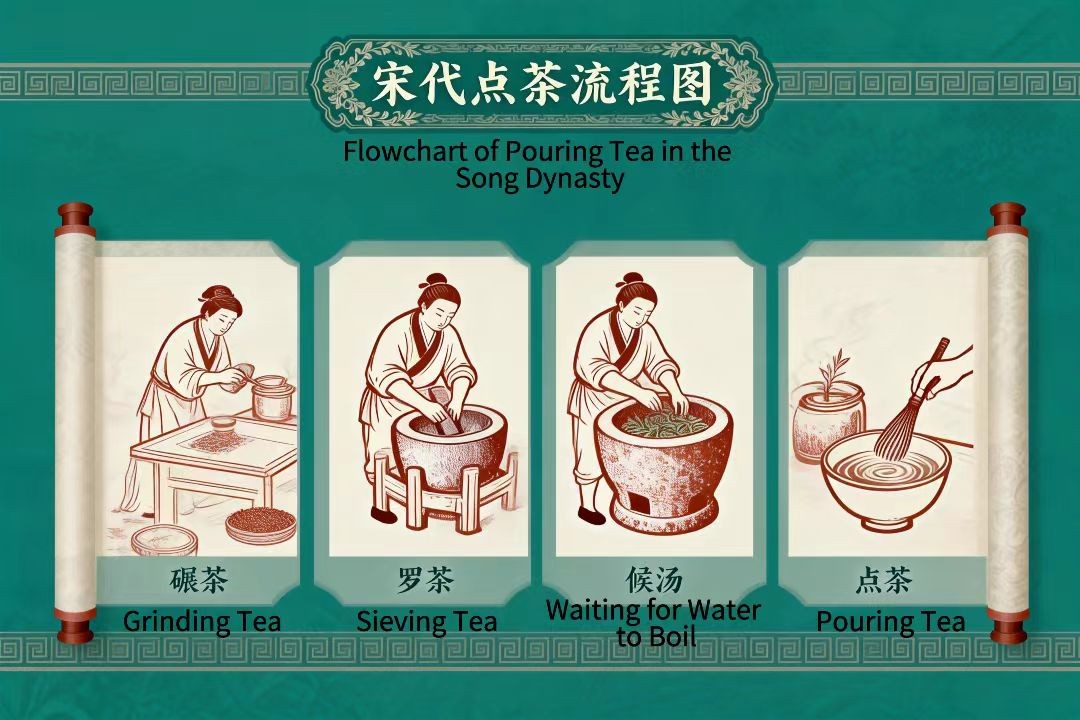
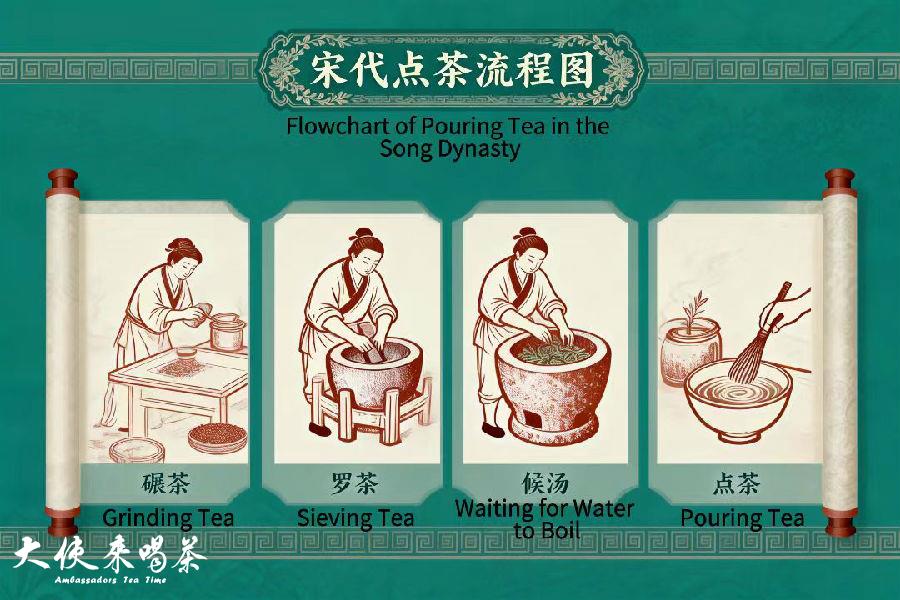
宋代点茶工序严谨,每一步都暗藏讲究,稍有不慎便会影响茶汤的口感与品相,核心步骤可概括为"碾茶、罗茶、候汤、点茶":
The pouring tea process in the Song Dynasty is rigorous, and every step has hidden details. A little carelessness will affect the taste and quality of the tea soup. The core steps can be summarized as "grinding tea, sieving tea, waiting for water to boil, and pouring tea":
碾茶:先将烘干的茶饼击碎,放入茶碾中碾成细腻的茶末。宋人对茶末的细腻度要求极高,认为"碾茶须令细,细则味甘香",碾好的茶末需达到"如粉如尘"的状态。
Grinding Tea: First, smash the dried tea cake and put it into a tea grinder to grind into fine tea powder. People in the Song Dynasty had extremely high requirements for the fineness of tea powder, believing that "tea must be ground finely; fine tea powder tastes sweet and fragrant". The ground tea powder needs to reach a state of "as fine as powder and dust".
罗茶:碾好的茶末需用茶罗(细密的筛网)过筛,去除粗末,只留细粉。茶罗的粗细直接决定茶汤的绵密程度,宋代茶罗多以细绢制成,筛出的茶末"白如凝脂",这也是后续形成优质沫饽的基础。
Sieving Tea: The ground tea powder needs to be sieved with a tea sieve (a fine mesh sieve) to remove coarse powder and retain only fine powder. The fineness of the tea sieve directly determines the density of the tea soup. Most tea sieves in the Song Dynasty were made of fine silk, and the sieved tea powder was "as white as condensed fat", which was also the basis for the subsequent formation of high-quality mobao.
候汤:即等待沸水的温度达到适宜状态。宋人点茶对水温要求苛刻,认为"水老则汤浑,水嫩则茶浮",最佳水温是"蟹眼已过鱼眼生"——水面泛起细密的小气泡(蟹眼),尚未出现大气泡(鱼眼)时,此时水温适中,能激发茶末的香气。
Waiting for Water to Boil: That is, waiting for the temperature of the boiling water to reach a suitable state. People in the Song Dynasty had strict requirements on the water temperature for pouring tea, believing that "over-boiled water makes the soup turbid, and under-boiled water makes the tea float". The optimal water temperature is "after the crab-eye bubbles appear and before the fish-eye bubbles form"——when fine small bubbles (crab-eye bubbles) appear on the water surface and large bubbles (fish-eye bubbles) have not yet appeared, the water temperature is moderate at this time, which can stimulate the aroma of the tea powder.
点茶:这是最关键的一步。先将筛好的茶末放入茶盏(宋代最推崇建阳窑的黑釉盏,黑釉能凸显沫饽的洁白),加入少量沸水,用茶筅轻轻搅拌,使茶末与水融合成糊状(称"调膏");再分次注入沸水,同时用茶筅快速、有力地顺时针搅拌,茶筅搅动的力度和速度要均匀,使茶汤中产生大量细腻的泡沫,直至沫饽洁白如雪、绵密如乳,紧贴盏壁不易消散,这便是宋代点茶的最佳品相——"咬盏"。
Pouring Tea:This is the most critical step. First, put the sieved tea powder into a tea cup (the black-glazed cup from Jianyang Kiln was most respected in the Song Dynasty, as the black glaze can highlight the whiteness of mobao), add a small amount of boiling water, and stir gently with a tea whisk to integrate the tea powder with water into a paste (called "tiaogao"); then pour boiling water in batches, and at the same time stir quickly and vigorously clockwise with the tea whisk. The strength and speed of the tea whisk stirring should be uniform to generate a lot of delicate foam in the tea soup, until the mobao is as white as snow, as dense as milk, closely attached to the cup wall and not easy to dissipate. This is the best quality of pouring tea in the Song Dynasty——"yaozhan" (foam adhering to the cup wall).
3. 点茶的"进阶玩法":斗茶
The "Advanced Game"
of Pouring Tea:
Competition Tea
宋代点茶的风靡,还催生出了极具趣味性的社交活动——斗茶。文人雅士乃至市井百姓,常会相聚斗茶,比拼点茶技艺的高低。斗茶的评判标准主要有两点:一是看沫饽的颜色和形态,以"洁白如雪、绵密持久"为胜;二是看茶汤的口感,以"清香甘醇、无苦涩味"为佳。有时斗茶还会加入"分茶"的技巧——通过控制茶筅的搅动力度和方向,在沫饽上勾勒出山水、花鸟、人物等图案,堪称宋代的"咖啡拉花",尽显文人的才情与雅致。
The popularity of pouring tea in the Song Dynasty also gave birth to a very interesting social activity——Competition Tea. Literati, scholars and even ordinary people often gathered to compete in pouring tea to compare the level of pouring tea skills. There are two main criteria for judging Competition Teas: first, looking at the color and shape of the mobao, with "as white as snow, dense and long-lasting" as the winner; second, looking at the taste of the tea soup, with "fragrant, sweet and mellow, no bitterness" as the best. Sometimes, the skill of "fencha" (dividing tea) is added to the Competition Tea——by controlling the strength and direction of the tea whisk stirring, patterns such as landscapes, flowers, birds and figures are outlined on the mobao, which can be called "coffee latte art" in the Song Dynasty, fully showing the talent and elegance of literati.
三、茶韵流转:穿越千年的生活美学
Flowing Tea Rhythm:
A Life Aesthetics Crossing Thousands of Years
从唐代煎茶到宋代点茶,再到明清时期的泡茶法,中国茶文化始终在传承中创新,却始终不变那份"清净、雅致、平和"的内核。宋代点茶虽已成为历史,但它所承载的宋人对生活细节的极致追求、对雅致情趣的执着坚守,却依然能给我们当下的生活带来启示。
From tea decoction in the Tang Dynasty to pouring tea in the Song Dynasty, and then to tea brewing in the Ming and Qing Dynasties, Chinese tea culture has always innovated in inheritance, but has always retained the core of "purity, elegance and peace". Although pouring tea in the Song Dynasty has become a thing of the past, the ultimate pursuit of life details and the persistent adherence to elegant taste of the people in the Song Dynasty carried by it can still bring enlightenment to our current life.
如今,我们不必再遵循繁琐的点茶工序,却可以在一杯清茶中,寻回那份慢下来的从容——清晨泡一壶茶,读一本闲书;午后邀三五好友,品茶聊天;深夜独酌一杯,梳理心绪。这便是茶文化留给我们的最珍贵的礼物:于方寸茶席间,感受生活的诗意与美好。
Today, we no longer need to follow the cumbersome pouring tea process, but we can find the calmness of slowing down in a cup of clear tea——brew a pot of tea in the morning and read a casual book; invite three or five friends to taste tea and chat in the afternoon; drink alone in the middle of the night and sort out our thoughts. This is the most precious gift left by tea culture: feeling the poetry and beauty of life in the small tea table.
想要解锁更多中国茶文化的精彩内容,欢迎关注智识文旅!下一期,智识文旅将带领大家走进明清时期的茶文化世界,深入了解明清泡茶法的独特魅力与传承脉络,千万不要错过~
If you want to explore more fascinating aspects of Chinese tea culture, please follow ZHISHI Cultural Tourism! In the next episode, ZHISHI Cultural Tourism will guide you to step into the tea culture world of the Ming and Qing dynasties, allowing you to deeply understand the unique charm and inheritance lineage of the tea brewing methods during those periods. Don't miss it!